Sunday, October 23, 2011

Asperger's Guide to the Euro Crisis


From Oct. 23, 2011 The NY Times Week In Review;

Photo from UK Reuters

It's All Connected: A Spectator's Guide to the Euro Crisis.

New York Times Photo/Graphic

Forgive me if I read this headline as "Asperger's Guide" - but the busy, nearly indecipherable graphic that accompanies the article is a visual that only a brilliant Asperger's brain could appreciate.  It's got percentages, lots of curvy arrows heading hither and yon.  If this is supposed to be a guide, no wonder the Euro is in trouble.

Thursday, October 6, 2011

Lurid Sells

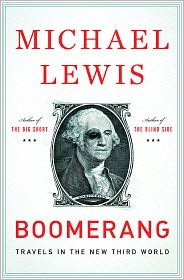
There's a full page ad for Boomerang - the new book by "The Blind Side" author, Michael Lewis - on the back of the NY Times Arts Section.


I skimmed this pull-out quote from NY Times book reviewer, Michiko Kakutani: 

Michael Lewis possesses the rare storyteller’s ability to make virtually any subject both lucid and compelling.

But instead of "lucid," I read lurid, which we all know sells more books than lucidity does, right?  Perhaps the public's appetite for revolting, murky dirt over clarity-of-thought is on the wane.  Let's hope so.

Tuesday, October 4, 2011

Mis-Lexia

Today, while reading Joe Hagen's New York Magazine cover piece about Twitter, I got to this paragraph:

Out in Hollywood, Omid Ashtari has telegraphed the same “authenticity” message. He spent several weeks this summer persuading Justin Timberlake to do a Twitter Q&A to promote a movie, which made the thematic hashtag #askjt the No. 1 Twitter topic in the world. “You’ve just got to be authentic; that’s how you grow your follower base,” Ashtari says. “Engagement and authenticity will lead to a stronger audience, and that’s pretty much what I preach.”


However, I read the last sentence as: "Entitlement and authority will lead to a stronger audience...."which got me thinking. Might entitlement and authority create a more powerful force in the world of Social Media than engagement and authenticity?  It worked for Mark Zuckerberg.