Sunday, December 11, 2011

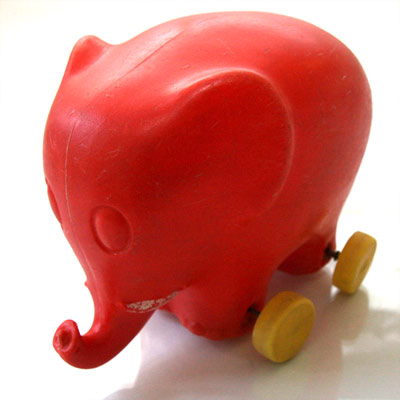
The Dangerous Plastic Elephant


I subscribe to a site called "Healthy Women from Bottom Line" - and I read today's email Subject line as 

THE DANGEROUS PLASTIC ELEPHANT.  What on earth could this be, I mused?  A caution against China-sourced circus-animal toys?  I was curious enough to click on the email and read further....

The Dangerous Plastic Epidemic

Editor’s note: It’s holiday time, so food is everywhere—and, unfortunately, much of that food is wrapped, sold, stored, cooked and/or served in plastic. You probably know that plastics can release toxic chemicals, but you may not know how to protect yourself.
Bottom Line/Personal, another newsletter in the Bottom Line family, recently published an article in which Patricia Hunt, PhD, a leading researcher on plastic toxins and a professor in the School of Molecular Biosciences at Washington State University, discussed the strategies she uses to safeguard her own family. It is a great article and very timely, so I want to share that vital information with HealthyWoman readers, too.

As Emily Litella would say,  "Oh, Epidemic.....Nevermind."

Tuesday, November 29, 2011

Escape Through Obesity

After reading about a technology that can determine whether a picture has been photoshopped, illustrated by actual photographs of fashion models, first with rolls of stomach fat then without, I turned to the NY Times Obituaries to read:

Lana Peters, Daughter of Stalin for Whom Obesity Was Escape, Dies at 85.

Wait, what?


The misread word in this case was Obscurity.  Of course. She escaped by becoming an unknown.  But can't people escape life by eating to the point of obesity?  Maybe, but they are more likely to escape FROM obesity.  And, anyway, Lana Peters appeared to be a fit woman throughout her obscure life.


I'd love to hear from readers about your own bouts with Mislexia.  Just leave a comment and I'll be sure to include it on a future blog.

Saturday, November 26, 2011

A Greek from Athens and a Pontiff at Pope Marina


Today, it's not so much about mislexia as it is about the coincidences that appear contrived by a B-Movie scriptwriter, but are actually true.  Take today's New York Times cover story about trends in treating schizophrenia, Finding Purpose After Living With Delusion.  The piece is datelined "Athens, GA" and focuses on Milt Greek - a schizophrenic capably living with the illness.  A guy named Greek from Athens?  For real?  Apparently so.  


Reminds me of the time I wrote a feature about New Bedford, MA for Offshore Magazine.  I had interviewed Captain Jeff Pontiff of Whaling City Launch Service that operated out of Pope Island Marina.  My editor emailed me shortly after I filed the story.  "Is this a joke?" he wrote.  "Pontiff at Pope Marina?"  As a non-Christian, I never even made the connection, but had to laugh when I read my editor's comment.  


"Yep, true," I replied.  "Sometimes truth is weirder than fiction."


Sunday, November 20, 2011

Orgasm Experiments

This morning, after finishing the New York Times Magazine cover story, about a Sex Ed teacher who encourages his students to have good sex, I picked up the New Yorker Magazine Food Issue and was deep into a piece called "Sacred Grounds" by Kelefa Sanneh - an exploration of the high-end gourmet coffee market.


Midway, I read; "At boutique cafes, customers liked the idea of paying a premium for a premium cup, especially if the cup came with a story about a plucky farmer's daughter and her orgasm experiments."

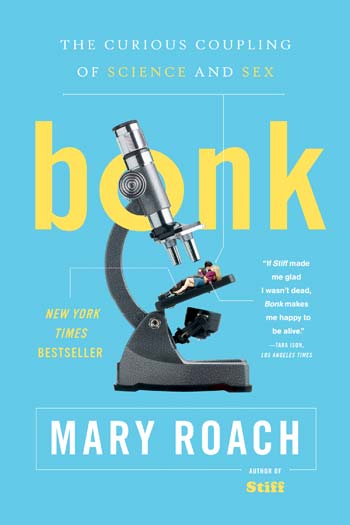
Orgasm experiments?? With coffee beans??  Hold the phone!  Of course, the written word was organic.  But might there be plucky a farmer's daughter out there doing orgasm experiments?  I'll have to ask my email-buddy, Mary Roach, whose own investigations into orgasm experiments led to her wonderfully funny book, BONK.

Thursday, November 10, 2011

Sell Your Child

Glimpsing through today's GO Magazine insert in the Stamford (CT) Advocate, I caught a piece about Heirloom Silhouettes with a picture of a black cut-out of a child's profile done by acclaimed artist Deborah O'Connor.


To the right of the article, there was an ad for Hochberg Jewelers imploring readers to "Sell Your Gold"

Seeing the little girl's silhouette juxtaposed with the ad, I mistakenly read "Gold" as "Child," which both startled and intrigued me.  Yes, I'll admit it now. There were those times when my kids (now grown) were throwing public tantrums that I would have read an advertisement to Sell Your Child with more than passing interest. 

Sunday, October 23, 2011

Asperger's Guide to the Euro Crisis


From Oct. 23, 2011 The NY Times Week In Review;

Photo from UK Reuters

It's All Connected: A Spectator's Guide to the Euro Crisis.

New York Times Photo/Graphic

Forgive me if I read this headline as "Asperger's Guide" - but the busy, nearly indecipherable graphic that accompanies the article is a visual that only a brilliant Asperger's brain could appreciate.  It's got percentages, lots of curvy arrows heading hither and yon.  If this is supposed to be a guide, no wonder the Euro is in trouble.

Thursday, October 6, 2011

Lurid Sells

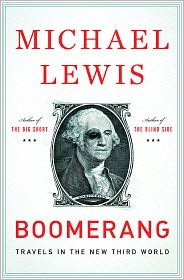
There's a full page ad for Boomerang - the new book by "The Blind Side" author, Michael Lewis - on the back of the NY Times Arts Section.


I skimmed this pull-out quote from NY Times book reviewer, Michiko Kakutani: 

Michael Lewis possesses the rare storyteller’s ability to make virtually any subject both lucid and compelling.

But instead of "lucid," I read lurid, which we all know sells more books than lucidity does, right?  Perhaps the public's appetite for revolting, murky dirt over clarity-of-thought is on the wane.  Let's hope so.

Tuesday, October 4, 2011

Mis-Lexia

Today, while reading Joe Hagen's New York Magazine cover piece about Twitter, I got to this paragraph:

Out in Hollywood, Omid Ashtari has telegraphed the same “authenticity” message. He spent several weeks this summer persuading Justin Timberlake to do a Twitter Q&A to promote a movie, which made the thematic hashtag #askjt the No. 1 Twitter topic in the world. “You’ve just got to be authentic; that’s how you grow your follower base,” Ashtari says. “Engagement and authenticity will lead to a stronger audience, and that’s pretty much what I preach.”


However, I read the last sentence as: "Entitlement and authority will lead to a stronger audience...."which got me thinking. Might entitlement and authority create a more powerful force in the world of Social Media than engagement and authenticity?  It worked for Mark Zuckerberg.